
Where Is the Evaporator Coil Located? A Simple Guide for Homeowners

Is your air conditioner struggling to keep up with the Florida heat? When your home isn’t cooling down, or you notice a strange leak near your indoor unit, it’s natural to feel concerned. These issues often point to a problem with a critical, but often hidden, part of your system. Many homeowners find themselves asking, “Where is the evaporator coil located?” and aren’t sure what it even does. As your neighbors in home comfort since 1963, we want to provide you with clear, straightforward answers you can trust.
In this simple guide, our family-owned team will walk you through everything you need to know. We’ll help you pinpoint the location of your evaporator coil, understand its essential role in cooling your home, and identify common problems that might require attention. Gaining this knowledge will help you feel more in control and know exactly when it’s time to call a professional for reliable, expert service. Let’s get your system back to keeping you cool and comfortable.
Key Takeaways
- This guide pinpoints exactly where is the evaporator coil located in common HVAC systems, so you can find it in minutes.
- Understand the simple but vital role your evaporator coil plays in absorbing heat and keeping your Florida home comfortable.
- Learn to recognize the common signs of a struggling evaporator coil, like poor cooling or water leaks, to prevent bigger issues.
- Discover why handling evaporator coil problems is a job for a trusted professional to ensure your safety and a lasting repair.
The Short Answer: Finding Your Evaporator Coil in Common HVAC Setups
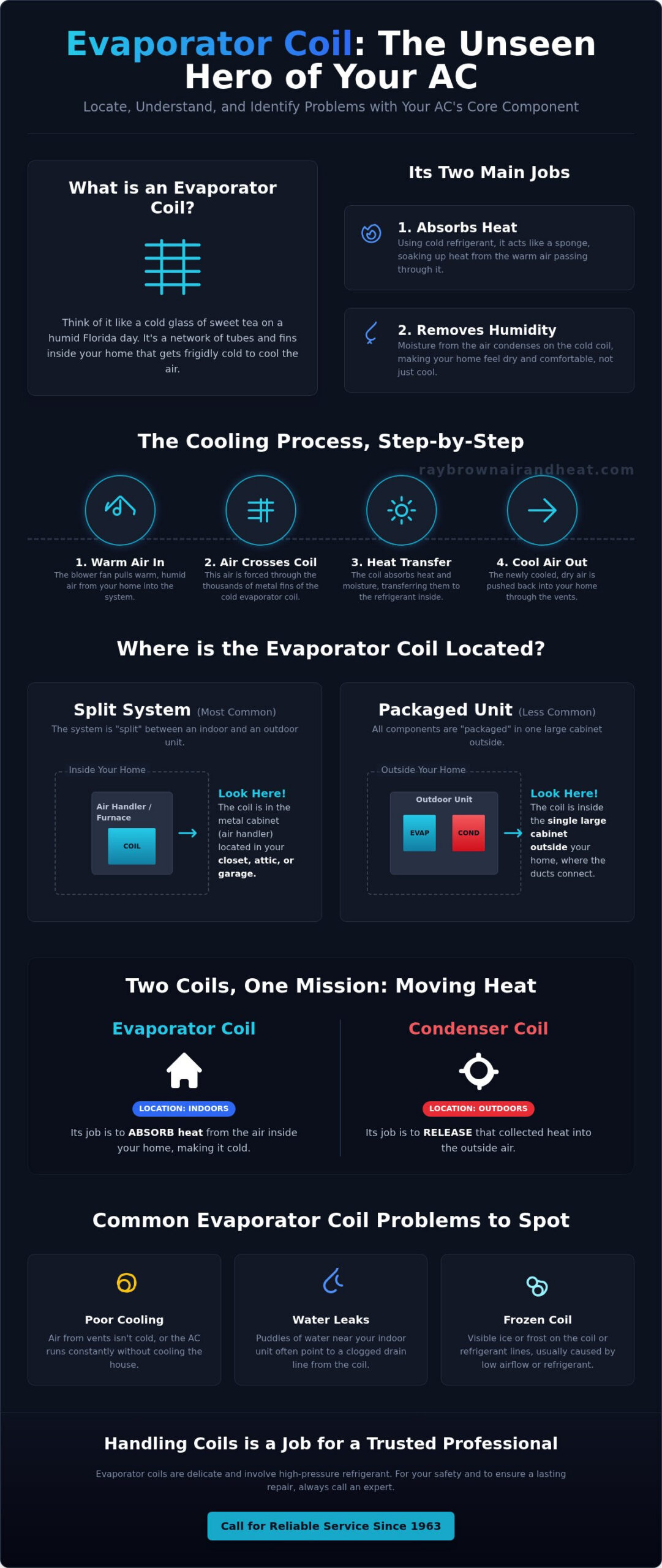
If you’re asking, “where is the evaporator coil located?” the simple answer is always the same: it’s inside your home, within your indoor AC unit. This crucial component is where the cooling magic happens. As cold refrigerant flows through its network of tubes and fins, the coil absorbs heat and moisture from your home’s air, much like a cold glass of sweet tea on a hot Florida day. Understanding the basics of How Air Conditioning Works helps clarify why this part is so vital to your comfort. The coil itself is usually shaped like an ‘A’ (an A-frame coil) or is a simple flat rectangle (a slab coil), and it’s always housed inside a protective metal case or plenum.
For a hands-on look at accessing the coil, this video can be very helpful:
In terms of airflow, the evaporator coil is always positioned just before the blower motor. This strategic placement allows the fan to pull your home’s warm air through the cold coil first, and then push the newly chilled air into your ductwork and throughout your home. Knowing where to look depends on the type of HVAC system you have.
For Split Systems: Inside the Air Handler or Furnace
For most homes in Brevard County, you have a split system. This means your evaporator coil is inside the air handler-the metal cabinet typically found in a closet, the attic, or garage. If you have a gas furnace, the coil is located in the same cabinet, usually right on top of the furnace. Look for the main ductwork connecting to this cabinet and the small PVC pipe (the condensate drain line) coming out of it. That’s your landmark.
For Packaged Units: Inside the Outdoor Cabinet
Less common for homes in our area, a packaged unit contains every component-including the evaporator coil-in one large cabinet outside. In this setup, you’ll find the evaporator coil in the same housing as the condenser and compressor. To locate it, look for the section of the outdoor unit where the large supply and return air ducts connect to your home. This all-in-one design is often used for commercial buildings or specific types of residential construction.
What Is an Evaporator Coil and What Does It Do?
Before we show you where is the evaporator coil located, it helps to understand what this vital component does. Think of your evaporator coil like a glass of ice-cold sweet tea on a humid Florida afternoon. Just as moisture from the air beads up on the cold glass, your evaporator coil uses a similar principle to cool and dehumidify your home’s air.
This hardworking part has two main jobs: absorbing heat from your indoor air and removing excess humidity. It’s filled with cold refrigerant that acts like a sponge for heat, and its ability to pull moisture from the air is what makes your home feel truly comfortable, not just cool but also dry and crisp.
The Cooling Process Explained Simply
The evaporator coil is central to the cooling cycle. While the science can get complex, the process is straightforward and happens in a continuous loop:
- Your system’s blower fan pulls warm, humid air from inside your house through the return vents.
- This air is forced to pass over the thousands of thin metal “fins” of the frigid evaporator coil.
- As the air makes contact, the coil absorbs its heat and moisture, transferring them into the refrigerant flowing within.
- The newly cooled and dehumidified air is then blown back into your rooms through the supply vents, lowering your home’s temperature.
All that moisture collected from the air turns into water droplets on the coil. This condensation drips into a drain pan and is channeled outside through a condensate line-that’s the small pipe you often see dripping water outside your home on a hot day.
Evaporator Coil vs. Condenser Coil: A Key Difference
Your air conditioning system is a “split system,” meaning it has two main parts with two different coils. Understanding their roles makes it clear why where is the evaporator coil located is always indoors.
Think of them as two halves of a team, working together to move heat from inside your home to the outside. The refrigerant is the messenger that runs between them. As the U.S. Department of Energy explains, this continuous heat transfer cycle is the core of how your air conditioner works.
- The Evaporator Coil (Indoor Unit) absorbs heat from your indoor air.
- The Condenser Coil (Outdoor Unit) releases that collected heat into the outdoor air.
Without both coils working in perfect harmony, your AC system simply couldn’t cool your home. One pulls the heat in, and the other pushes it out.
Common Evaporator Coil Problems You Can Spot
Now that you know where the evaporator coil is located, it’s easier to keep an eye out for potential trouble. Spotting a problem early can save you from more expensive repairs and keep your family comfortable. As a family-owned business serving Brevard County since 1963, we believe in empowering our neighbors with helpful knowledge. Here are four common signs that your evaporator coil needs professional attention.
Sign #1: Dirty or Clogged Coils
One of the most frequent issues we see is an evaporator coil caked in dust, pet dander, and other airborne debris. This buildup acts like an unwanted blanket, preventing the coil from properly absorbing heat from your home’s air. You’ll notice the consequences as reduced airflow from your vents and a system that struggles to cool your home. This forces your AC to work harder, increasing energy bills and putting unnecessary strain on the entire system. Understanding how your home air conditioner works makes it clear why a clean coil is essential for efficient operation.
Sign #2: Ice or Frost Buildup
Seeing a layer of ice or frost on your evaporator coil is a clear red flag. While it might seem like a sign of powerful cooling, it actually indicates a serious problem. This freezing is typically caused by one of two things: restricted airflow from a dirty air filter or low refrigerant levels due to a leak. If left unaddressed, the ice can block airflow entirely and potentially cause severe, costly damage to your system’s compressor.
Sign #3: Water Leaks and Clogged Drains
Your evaporator coil removes humidity from the air, which collects as condensation and flows out through a drain line. If you see puddles of water around your indoor air handler, it’s often because this drain line is clogged with algae or debris. The water has nowhere to go and overflows the drain pan. This is more than just a nuisance; it can lead to significant water damage in your walls, ceilings, and floors, as well as encourage mold growth.
Sign #4: Refrigerant Leaks
Refrigerant is the lifeblood of your air conditioner. If your evaporator coil develops a leak from corrosion or vibrations, your system’s performance will plummet. Telltale signs include a hissing or bubbling sound near the indoor unit, an oily residue on the coil itself, or an AC that runs constantly but produces little to no cool air. Refrigerant leaks are bad for your system and the environment, requiring expert repair from a licensed technician.
If you notice any of these symptoms, it’s time to call for professional help. For honest and reliable HVAC service, trust the team at Ray Brown Air and Heat. We’re here to keep your home cool and comfortable.
When to Call Brevard County’s Trusted HVAC Experts Since 1963
While knowing where is the evaporator coil located is the first step, servicing it is a job best left to professionals. Handling refrigerant is not only dangerous but also requires EPA certification. A small mistake with the complex electrical components or delicate aluminum fins can lead to costly damage or personal injury. When your AC system shows signs of trouble, it’s time to call for expert help.
Whether you are in Florida or require expert HVAC Installation, Repair, and Maintenance in the Northern Virginia area, choosing a provider with decades of experience ensures your home comfort is in good hands.
At Ray Brown Air and Heat, we understand that AC problems don’t wait for business hours. That’s why our family-owned and operated team offers 24/7 emergency service for urgent issues like refrigerant leaks or a completely frozen system. Your comfort and safety are our top priorities.
Professional Coil Cleaning and Repair
A dirty or malfunctioning evaporator coil can cause a host of problems. Our expert technicians arrive with the specialized tools and cleaning agents to remove stubborn grime and biological growth safely and effectively. We accurately diagnose the root cause of issues like freezing or leaks, providing honest advice on whether a simple repair or a full coil replacement is the most cost-effective solution for your home.
Your Neighbors in Titusville, Cocoa, and Merritt Island
Since 1963, we’ve been the trusted HVAC provider for families across the Space Coast. Our reputation in communities like Titusville, Cocoa, and Merritt Island is built on decades of dependable service and fair, transparent pricing. We know the strain Florida’s heat and humidity put on an air conditioner, and we have the experience to keep your system running efficiently. Don’t guess with your comfort. Schedule trusted service today.
Your Brevard County HVAC Experts Are Here to Help
Understanding your HVAC system is a great first step toward maintaining a comfortable home. Now that you know where is the evaporator coil located-typically inside your indoor air handler or furnace cabinet-you can more easily spot warning signs like freezing, water leaks, or reduced airflow. While identifying the problem is helpful, remember that evaporator coil repairs require professional expertise to ensure they are handled safely and correctly.
If you suspect trouble with your system, don’t hesitate. As a family-owned and operated company since 1963, Ray Brown Air and Heat has provided dependable service to our neighbors across Brevard County for generations. For any issues, from simple fixes to urgent problems, you can count on our expert team. Experiencing coil trouble? Call Ray Brown Air and Heat for 24/7 emergency repair.
We proudly serve homeowners in Titusville, Cocoa, Merritt Island, and beyond, and we’re always here to ensure your peace of mind. Let us help you stay cool and comfortable!
Frequently Asked Questions
How do I know if my evaporator coil is bad?
You might have a bad evaporator coil if your AC is blowing warm air, not cooling your home effectively, or making a hissing sound. You may also notice water pooling around your indoor air handler from a frozen coil or a refrigerant leak. These are clear signs that it’s time to call a professional for an inspection. Our expert technicians can quickly diagnose the problem and provide an honest solution to get your home comfortable again.
What causes an evaporator coil to freeze up?
The most common causes for a frozen evaporator coil are restricted airflow and low refrigerant. A dirty air filter or blocked vents prevent warm air from passing over the coil, causing it to get too cold and freeze. A refrigerant leak can also lower the pressure in the system, leading to freezing. Regularly changing your filter is a great first step, but if freezing persists, it’s best to have a trusted technician take a look.
Can I clean my AC evaporator coil myself?
While it may be tempting, we strongly advise against cleaning the evaporator coil yourself. The coil has delicate aluminum fins that can be easily damaged, leading to costly repairs. Knowing where the evaporator coil is located is one thing, but accessing and cleaning it safely requires special tools and expertise. For your safety and the health of your AC system, this job is best left to a trained professional from a company you can trust, like Ray Brown Air & Heat.
How much does it cost to replace an evaporator coil?
The cost to replace an evaporator coil can vary significantly, typically ranging from $1,000 to over $3,000. The final price depends on your AC unit’s brand and model, whether the part is under warranty, and the labor involved. As a family-owned company serving our neighbors since 1963, we promise to provide a clear, upfront estimate with no hidden fees, so you know exactly what to expect before any work begins.
How long does an evaporator coil typically last in Florida’s humid climate?
In Florida’s humid and often salty air, an evaporator coil generally lasts between 10 and 15 years. The constant moisture and corrosive elements can lead to a specific type of corrosion that causes refrigerant leaks over time. Regular professional maintenance is the best way to protect your investment and extend the life of your coil, ensuring your system runs efficiently for as long as possible in our challenging Space Coast climate.
Is a leaking evaporator coil dangerous?
A refrigerant leak is not typically an immediate danger to your health in a well-ventilated home, but it shouldn’t be ignored. The primary issue is that your air conditioner will stop cooling, which can create an unsafe and uncomfortable environment during a Florida heatwave. Inhaling concentrated refrigerant can be harmful, so if you suspect a leak, it’s always safest to call a professional right away to handle the repair safely and efficiently.