
Avoiding HVAC Repair Scams: A Homeowner’s Protection Checklist
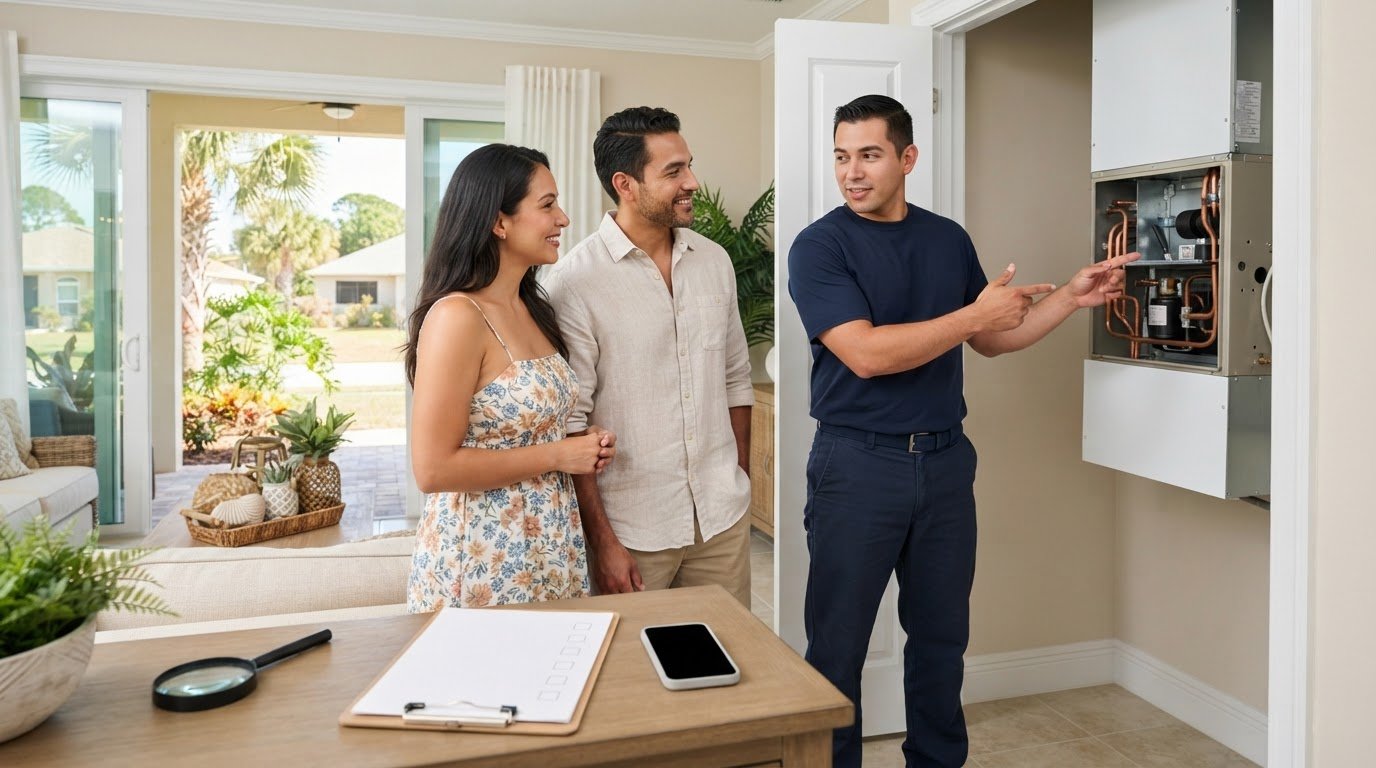
What if the most expensive HVAC recommendation isn’t the right one? In Florida heat, it’s easy to feel rushed when a technician mentions a refrigerant leak, major repair, or full system replacement. But you deserve a clear explanation before approving work. Avoiding hvac repair scams starts with asking questions and looking for evidence, not making a pressured decision.
It’s reasonable to wonder whether a repair is truly necessary. A trustworthy technician should explain the problem in plain language, show you what they found, and provide a written estimate. If the diagnosis involves major work or you’re unsure, getting a second opinion is a sensible way to compare options.
This checklist will help you spot high-pressure tactics, verify a contractor’s credentials, and know what to ask before authorizing a repair. If you’re in Brevard County, Titusville, Cocoa Beach, or elsewhere in Central Florida, use these practical steps to protect your home and feel more confident about your HVAC decisions.
Key Takeaways
- When avoiding hvac repair scams, be cautious of urgent demands, unsolicited offers, and unusually low service-fee pitches.
- If a technician says your system needs refrigerant, ask how they’ll locate and address the leak, not just recharge the unit.
- Check a contractor’s license status through Florida’s DBPR and look for a verifiable local address and reputation.
- Ask for a written estimate and a clear explanation before approving major repairs or a system replacement.
- A second opinion can help you assess a costly diagnosis without pressure, especially if the contractor discourages you from getting one.
Avoiding HVAC Repair Scams: Spotting the Red Flags
Your air conditioner stops cooling, and a technician says you must approve a costly repair right away. In Florida heat, that kind of pressure can make it hard to pause and ask questions. A genuine urgent repair may need prompt attention, but urgency shouldn’t prevent you from understanding the diagnosis or reviewing the proposed work.
Scams can also begin with an unsolicited door-to-door visit or telemarketing call offering an unusually cheap inspection or repair. A low advertised price isn’t proof of dishonesty, but be cautious if the offer quickly turns into a demand for expensive work. For an overview of how confidence scams work, consider how trust can be used to make someone lower their guard.
To see examples of common AC repair warning signs, watch this video:
The High-Pressure Sales Pitch
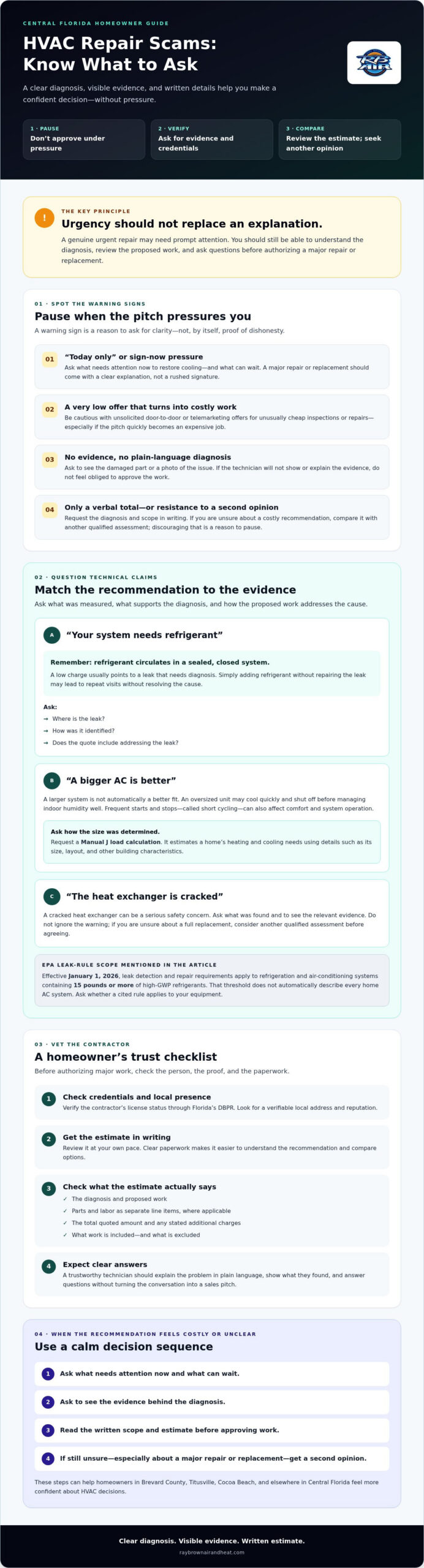
“Today only” pricing deserves a pause. A contractor who ties a major repair or replacement to an immediate signature may be using the heat to rush your decision. Ask what needs attention now to restore cooling and what can wait. A necessary repair addresses a diagnosed problem. A forced upgrade pushes a larger project without clearly explaining why it’s needed. Ask to see the damaged part or a photo of the issue. If the technician won’t show or explain the evidence, don’t feel obliged to approve the work.
Vague Verbal Quotes vs. Detailed Paperwork
A handshake or verbal total leaves little clarity about what you’re authorizing. Before major work begins, ask for a written estimate and review it at your own pace. It should clearly describe:
- The diagnosis and proposed work
- Parts and labor as separate line items, where applicable
- The total quoted amount and any stated additional charges
- What work is included and what is excluded
If the technician won’t put the diagnosis and scope in writing, treat that as a serious warning sign. Clear paperwork helps you compare recommendations and is a practical part of avoiding hvac repair scams. A professional should answer questions without turning the conversation into a sales pitch.
Common HVAC Scams Every Florida Homeowner Should Know
Some HVAC recommendations sound technical enough to be hard to question. A practical way to avoid hvac repair scams is to ask what the technician measured, what evidence supports the diagnosis, and how the proposed work will address the problem. Florida’s heat can make an AC issue feel urgent, but a clear explanation still matters for homeowners in Brevard County and across Central Florida.
The Refrigerant Leak Trap
Refrigerant circulates in a sealed, closed system, so it doesn’t run out like gasoline. A low charge usually points to a leak that needs diagnosis. If you’re told the system needs refrigerant again, ask where the leak is, how it was identified, and whether the quote includes addressing it. Simply adding refrigerant without repairing the leak may lead to repeat visits without resolving the cause.
EPA leak rules have a specific scope: effective January 1, 2026, leak detection and repair requirements apply to refrigeration and air-conditioning systems containing 15 pounds or more of high-GWP refrigerants. That threshold doesn’t automatically describe every home AC system. Ask the contractor to explain whether a cited rule applies to your equipment and what work they recommend. The FTC consumer advice also offers practical guidance for evaluating home-improvement claims.
The “Bigger Is Better” Bait-and-Switch
A larger AC isn’t automatically a better fit. An oversized system may cool the home quickly and shut off before it runs long enough to manage indoor humidity well. Frequent starts and stops, called short cycling, can also affect comfort and system operation. Ask how the proposed size was determined, and request a Manual J load calculation. It estimates a home’s heating and cooling needs using details such as its size, layout, and other building characteristics. Don’t accept “bigger is safer” as the whole explanation. The recommendation should connect to your home’s needs, not simply a larger sale.
Other diagnoses also call for evidence. If a technician reports a cracked heat exchanger, ask what they found and to see the relevant evidence. This can be a serious safety concern, so don’t ignore the warning. If you’re unsure about a full replacement, consider another qualified assessment before agreeing to the work. Capacitors and contactors can fail, too, but a recommendation to replace them as “preventative” should come with an explanation of their condition and test results, not just a vague claim that they might break.
Ray Brown Air and Heat is a family-owned HVAC company serving Brevard County since 1963. Learn more about its local HVAC repair service as you compare your options in Titusville, Cocoa Beach, and nearby communities.
The Homeowner’s Trust Checklist: Vetting Your Contractor
A trustworthy HVAC contractor should be comfortable answering questions before you approve work. When avoiding hvac repair scams, verify credentials, review the company’s local track record, and ask for clear terms. No single credential or positive review tells the whole story, so look for several signs that add up.
Verifying Local Roots and Licensing
Ask for the contractor’s Florida license number and confirm its status through the Florida Department of Business and Professional Regulation. Look for a “Current, Active” status and make sure the license information matches the person or business providing the work. Ask for proof of insurance, too, and confirm what it covers. A physical local address and established history can make it easier to identify who you’re hiring and contact them later. Ray Brown Air and Heat is family-owned and has served Brevard County since 1963, providing a local history homeowners can use as a point of reference.
Analyzing Professional Certifications
NATE certification can be a helpful sign of a technician’s HVAC knowledge, but it doesn’t replace checking licensing, insurance, and the diagnosis itself. If a company says it’s factory-authorized, ask what that status means and what requirements apply. Also ask whether the technician has experience with your system’s make and model. A straightforward answer should explain relevant experience rather than using credentials as a substitute for explaining the repair.
Before scheduling or signing, use this quick review:
- Check reviews across platforms. Look for recurring reports of surprise charges, pressure to replace equipment, or reluctance to explain recommendations. One review reflects one person’s experience. Repeated patterns deserve attention.
- Ask about parts and labor coverage. Find out whether the proposed work includes a warranty on parts, labor, or both. Request the terms in writing, including any stated limits or exclusions.
- Confirm the business details. Match the company name on the estimate with its license information, and make sure you have a working phone number and physical address.
- Get the diagnosis and scope in writing. The paperwork should identify the recommended work clearly enough for you to compare it with another contractor’s assessment.
A certification, warranty, or long history shouldn’t stop you from asking questions. A dependable professional will explain the recommendation and give you time to review the terms. If details don’t line up, pause and verify them before authorizing the repair.
When to Walk Away and Get a Second Opinion
If a repair visit starts to feel like a car dealership, with pressure, a rushed pitch, and little room for questions, pause before signing. A technician who recommends a major repair or full system replacement should be able to explain the findings and give you time to consider them. A second opinion isn’t an accusation. A reputable contractor should understand that you want confidence before making a significant decision.
The Value of a Second Opinion
For a costly repair or replacement recommendation, another assessment can help you confirm whether the proposed work is necessary and explore other options. To make the second visit useful, describe the symptoms and share the system’s service history, but let the new technician inspect it and explain their findings before presenting the first contractor’s diagnosis. Then compare what each professional observed. For more context, see this guide to AC repair and service for Florida homeowners.
Comparing “Apples to Apples” on HVAC Quotes
The lowest quote may leave out work, use different equipment, or offer different warranty terms, so compare the details rather than the total alone. For replacement proposals, check that equipment capacities and SEER2 efficiency ratings are clearly stated. Compare what each warranty covers, including parts and labor, and review any exclusions in writing. This Florida AC installation guide can help you prepare questions about a new system.
Before requesting an independent assessment, gather the written diagnosis, estimate, and any photos or service records you have. Ask the second contractor to provide their own findings and a detailed scope of work. Once both assessments are complete, compare:
- The evidence: What did each technician inspect or test?
- The proposed work: Do the recommendations address the same problem?
- The full terms: Are parts, labor, equipment details, and warranty coverage explained?
Clear answers help you make a considered choice, not a hurried one. Ray Brown Air and Heat is family-owned and has served Brevard County since 1963. If you’d like another perspective on an HVAC concern, learn about its HVAC repair service.
Ray Brown Air and Heat: Service in Brevard County Since 1963
Ray Brown Air and Heat is a family-owned and operated HVAC company that has served Brevard County since 1963. Its long local history gives homeowners a point of reference when comparing contractors, but no company history proves that every diagnosis is right. Keep asking questions and reviewing recommendations before approving work.
A Local HVAC Company Serving Brevard County
When you’re evaluating a repair recommendation, ask what the technician found and why the work is being suggested. You should understand the decision before you make it. That’s useful whether you’re comparing options in Titusville, Cocoa Beach, or another part of Brevard County and Central Florida.
A company’s age alone can’t protect you from every bad recommendation. What matters is whether the technician communicates clearly, respects your choices, and gives you enough information to understand the work being proposed. Those are useful standards for any contractor you’re considering.
Ready to Discuss an HVAC Concern?
If you contact Ray Brown Air and Heat about an HVAC concern, describe what your system is doing and share any previous diagnosis or estimate you have. Ask what the technician will assess, how they’ll explain the findings, and whether you’ll receive the proposed work and pricing in writing before authorizing a repair. Those questions set clear expectations and help you stay in control of the decision.
Ray Brown Air and Heat provides air conditioning and heating installation, replacement, maintenance, and 24/7 emergency repair. Its technicians service all makes and models. Whether you need help with an urgent problem or want to discuss a recommendation that doesn’t feel right, start with a clear conversation. It’s one practical step toward avoiding hvac repair scams and choosing service with confidence.
Contact Ray Brown Air and Heat about HVAC service in Brevard County.
Make Your Next HVAC Decision With Confidence
A clear diagnosis, written estimate, and time to consider your options can help you stay in control of an HVAC repair decision. If a recommendation feels rushed or doesn’t make sense, pause and seek another assessment. These steps make avoiding hvac repair scams less daunting, even when Florida’s heat makes a cooling problem feel urgent.
Ray Brown Air and Heat is family-owned and has served Brevard County since 1963. The company provides 24/7 emergency repair for urgent air conditioning and heating needs, as well as installation and maintenance. Homeowners in Titusville, Cocoa Beach, and throughout Central Florida can use the same checklist to evaluate a recommendation and compare their options.
You don’t have to approve work until you understand what’s being recommended. Ask for the details, compare your options, and choose the next step with confidence. Find HVAC repair and installation services from Ray Brown Air and Heat.
Frequently Asked Questions
How do I know if my AC technician is lying about a refrigerant leak?
You can’t tell from the claim alone, so ask the technician to explain how they tested the system and where they found evidence of a leak. Refrigerant doesn’t get used up like fuel. If the level is low, a leak may be present. Request the diagnosis and proposed repair in writing. If the explanation is vague or you’re unsure, get another assessment before approving repeated refrigerant additions.
Is it normal for an HVAC company to ask for full payment upfront?
Full payment before work begins is a warning sign, especially if the contractor wants cash and won’t provide clear written terms. A limited deposit for parts may be reasonable, but ask what it covers, when the balance is due, and what happens if the work isn’t completed. Get the payment schedule in writing, and don’t feel pressured to pay before you understand the agreement.
Should I get a second opinion on a major HVAC repair quote?
Yes, consider a second opinion if the recommendation involves a major repair or full system replacement and you’re uncertain about the diagnosis. Share the symptoms, service history, and written quote, but let the second technician inspect the equipment and form an independent assessment. Compare the evidence and proposed work, not just the totals. Taking time to verify a costly recommendation is a sensible step in avoiding hvac repair scams.
What are the red flags of a “fly-by-night” HVAC contractor?
Be cautious if a contractor won’t provide a verifiable business address, Florida license details, insurance information, or a written estimate. Other warning signs include demanding full payment upfront, using high-pressure tactics, or refusing to explain a diagnosis. Check reviews across more than one platform for recurring complaints. If you’re hiring in Brevard County, Titusville, or Cocoa Beach, look for a local history you can independently confirm.
Can a technician legally disable my unit if they claim it is dangerous?
There isn’t enough information to determine legality in every situation. It can depend on the circumstances, agreement, and applicable rules. Ask the technician to explain the specific safety concern and document what they did and why. Don’t operate equipment they identify as unsafe until the concern is assessed. If you dispute the action, seek an independent licensed contractor’s assessment and contact the appropriate Florida authority or a qualified legal professional.
How can I verify if an HVAC company is actually licensed in Florida?
Ask for the contractor’s license number, then search for it through the Florida Department of Business and Professional Regulation at myfloridalicense.com. Check that the record shows “Current, Active” status and matches the contractor or business you’re hiring. Florida distinguishes certified contractors, who can work statewide, from registered contractors, whose work is limited to specific local jurisdictions. Verify the details before authorizing work.
What is a Manual J calculation and why does it prevent scams?
A Manual J calculation estimates a home’s heating and cooling needs using details such as its size, layout, and construction characteristics. It helps inform equipment sizing, so you can ask a contractor to explain the calculation behind a replacement recommendation instead of accepting “bigger is better.” It doesn’t prevent every scam or guarantee a correct proposal, but it gives you a concrete basis for comparing system sizes and asking informed questions.
Why do some HVAC companies push for a full replacement instead of a repair?
A replacement may be appropriate if a system has serious damage or the contractor can explain why repair isn’t a sound option. But a larger sale can also benefit the seller, so ask for evidence, a written repair option when feasible, and an explanation of the replacement recommendation. Compare the equipment sizing, scope, and warranty terms. If the answers are unclear or pressured, pause and request another assessment.