
AC Troubleshooting Checklist: What to Do When It Stops
Imagine waking up at 2 AM to a silent house and a heavy layer of humidity, only to realize the cooling hum of your air conditioner has vanished. In the heart of Florida, this isn’t just a minor annoyance; it’s a stressful situation that leaves you worrying about high repair costs and whether anyone is even available to help. We understand that frustration because our family-owned team has been helping neighbors in Cocoa and Rockledge stay cool since 1963. Knowing exactly what to do when your ac stops working can be the difference between a simple five minute fix and an unnecessary service fee.
It’s completely normal to feel a bit of panic when the indoor temperature starts to climb. You want your home’s comfort restored quickly and reliably. This guide provides a straightforward, step-by-step checklist to help you troubleshoot the most common issues yourself. We’ll walk you through everything from thermostat settings to tripped breakers, ensuring you have the knowledge to save money on simple fixes. By the end, you’ll know exactly how to identify a DIY solution and when it’s truly time to call in a trusted professional for a deeper look.
Key Takeaways
- Learn how to perform a safe initial inspection by verifying thermostat settings before calling for a repair.
- Identify simple power issues by checking your home’s main HVAC circuit breaker and the outdoor disconnect switch.
- Find out exactly what to do when your ac stops working by troubleshooting common Florida humidity problems like clogged condensate drain lines.
- Recognize dangerous red flags, such as electrical odors or loud banging, that indicate it’s time to shut down the system and call a pro.
- Gain peace of mind knowing how to access 24/7 emergency support from a family-owned team serving Brevard County since 1963.
Immediate Steps: The ‘Don’t Panic’ AC Troubleshooting Checklist
When the Florida sun is beating down on your Titusville home, a sudden cooling failure feels like an emergency. It’s natural to worry about the heat or the cost of a technician, but many issues have simple solutions. Before you reach for the phone, follow this checklist to see if you can resolve the problem yourself. Understanding how air conditioning systems work helps clarify why these initial steps are so important for protecting your equipment.
Establishing a Safe Troubleshooting Environment
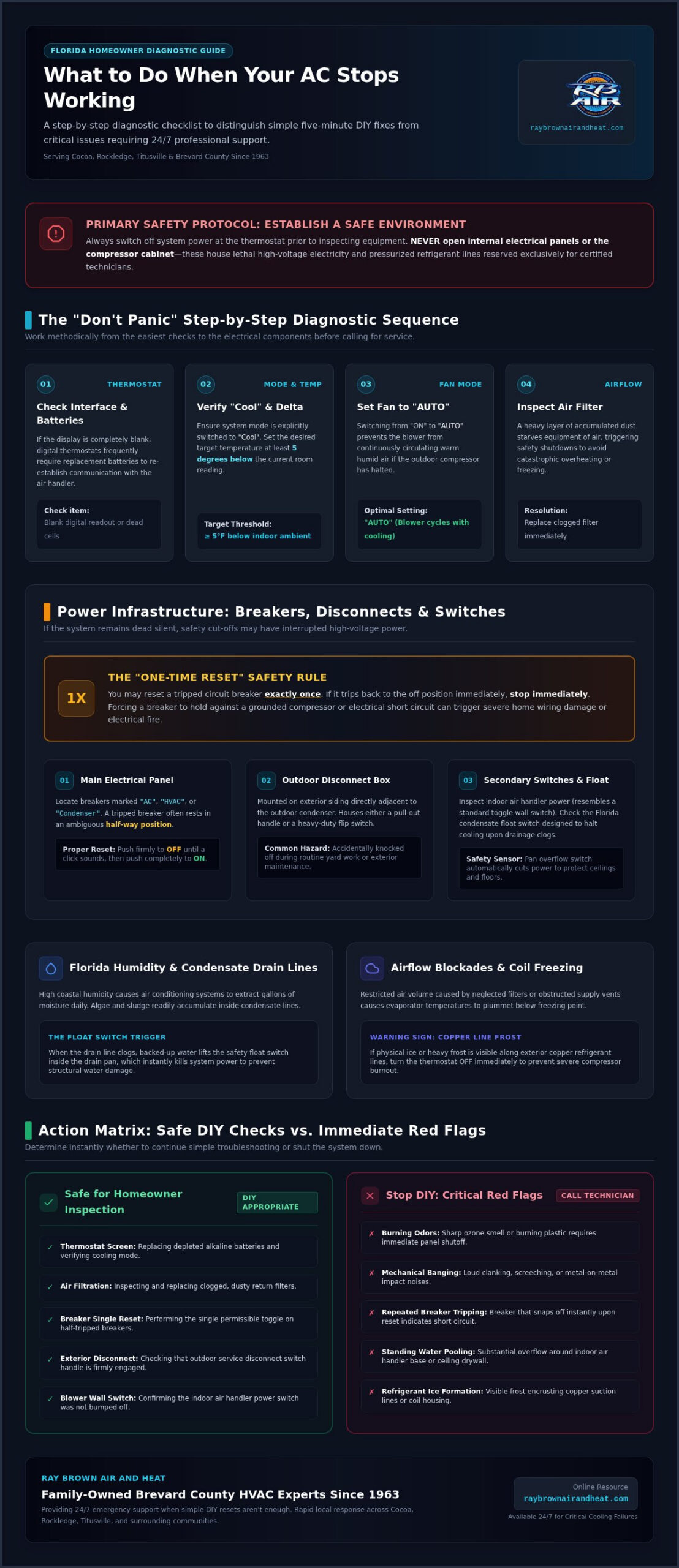
Safety is the most important part of any DIY check. Always start by turning your system off at the thermostat. This prevents the unit from cycling on while you’re looking at it. You should never attempt to open internal electrical panels or the compressor cabinet. These components house high-voltage electricity and sensitive refrigerant lines that only a professional should handle. Our family-owned team has seen many avoidable injuries because homeowners tried to dig too deep into the machinery.
While the system is off, use your senses to look for red flags. If you smell burning plastic or a sharp ozone scent, stop immediately and turn off the power at the main electrical panel. Look for water pooling around the indoor unit or ice forming on the copper lines. These are clear signs that the system needs professional help rather than a simple reset. Taking a moment to do a visual check can prevent a small problem from turning into an expensive repair.
Verifying the Basics: Thermostat and Settings
If you aren’t sure what to do when your ac stops working, the thermostat is the best place to start. Check if the screen is blank. Digital thermostats often need new batteries to communicate with the rest of the HVAC system. If the screen is active, ensure the mode is set to “Cool” and the temperature is at least five degrees lower than the current indoor reading. It’s common for settings to get bumped or changed accidentally during a busy day.
Check the fan setting as well. Setting the fan to “Auto” ensures the blower only runs when the air is being cooled. If you set it to “On,” the fan will blow air constantly, even if the cooling cycle has failed. Finally, pull out your air filter. A thick layer of dust can starve the system of air, causing it to shut down to prevent damage. Replacing a dirty filter is one of the easiest ways to get your home back to a comfortable temperature without spending a fortune. We’ve been helping Brevard County families since 1963, and we know that these small steps often solve the biggest headaches.
Power Problems: Breakers, Switches, and Batteries
Sometimes the most stressful cooling failures have the simplest causes. If your system is completely silent, it might not be broken; it might just be out of power. Electrical issues often stem from a safety feature doing its job. When a component draws too much electricity, the circuit breaker trips to prevent a fire. Knowing what to do when your ac stops working starts with identifying whether the issue is mechanical or purely electrical.
Before you start flipping switches, remember the “One-Time Reset” rule. You can reset a tripped breaker exactly once. If it clicks back to the off position immediately, do not try again. Forcing a breaker to stay on when there’s a short circuit or a grounded compressor can cause permanent damage to your unit or your home’s wiring. Our family-owned team has seen many simple repairs turn into expensive replacements because of repeated breaker resets. If you are trying to figure out what to do when your ac stops working, checking your home’s power sources is a vital step before calling for service.
Checking the Main Electrical Panel
Head to your main electrical panel, usually located in the garage or on an exterior wall. Look for the breakers labeled “AC,” “HVAC,” or “Condenser.” A tripped breaker doesn’t always look obvious. It often sits in a “half-way” position between on and off. To reset it properly, you must first flip it completely to the “Off” position until you hear a distinct click, then flip it back to “On.” If the air handler starts up but the outdoor unit stays silent, the problem might be at the secondary disconnect switch.
The Outdoor Disconnect and Secondary Switches
Every outdoor unit has a disconnect box nearby, often mounted on the house siding. Inside this box, you’ll find either a large pull-out handle or a heavy-duty flip switch. Ensure this hasn’t been turned off by mistake during yard work or by a curious child. Indoors, check the power switch on your furnace or air handler. This often looks like a standard light switch and can easily be toggled off by accident.
In Florida, the “float switch” is a common culprit. This small device sits in your drain pan or on the condensate line. If your drain line clogs with algae, the switch floats up and cuts power to the system to prevent a flood. If you find water in your emergency pan, you’ve found your problem. For complex electrical failures that a simple switch can’t fix, our experts provide 24/7 HVAC repair you can trust to get your home back to a comfortable temperature quickly.
Airflow and Drainage: The Florida Humidity Factor
Living on the Space Coast means dealing with high humidity every single day. This moisture doesn’t just make you sweat; it puts a massive strain on your HVAC system. When neighbors ask us what to do when your ac stops working, the answer often lies in how well the system is breathing. If air can’t move freely through your unit, the entire cooling process grinds to a halt. In our local climate, dust and biological growth are the primary enemies of consistent airflow.
The Critical Role of Air Filters
In towns like Cocoa and Merritt Island, the combination of salt air, pollen, and high humidity means filters get dirty faster than in other parts of the country. We recommend checking your filter every 30 days. You can use the “Light Test” to check its condition. Hold your filter up to a bright light; if you can’t see the light through the fibers, the filter is restricted. Running your system with a clogged filter or no filter at all can lead to severe debris buildup on your evaporator coil for air conditioner, which often requires a professional cleaning to fix. Our family-owned team has seen simple filter neglect lead to total system freeze-ups more times than we can count.
Clearing Clogged Condensate Drain Lines
Florida humidity creates a significant amount of condensation as your AC pulls moisture from the air. This water flows out through a PVC pipe, but because our weather is so warm, algae and slime love to grow inside these lines. Knowing what to do when your ac stops working often involves checking these drainage points first. If you see water standing in the emergency pan under your indoor unit, the line is likely blocked, and the float switch has cut power to prevent a flood.
You can often clear this yourself using a wet/dry vacuum. Attach the vacuum hose to the outside end of the drain line and create a tight seal with a cloth. Sucking out the clog for about 30 seconds can restore your cooling immediately. To prevent future issues, pour a cup of distilled white vinegar down the drain line every few months to keep the algae at bay. This simple maintenance task is a staple for homeowners who want to avoid middle-of-the-night service calls.
Don’t forget the outdoor condenser unit. Grass clippings, leaves, and dirt can coat the exterior coils, preventing the unit from releasing heat. A gentle rinse with a garden hose can make a huge difference in efficiency. However, if you notice ice forming on the copper pipes, turn the system off immediately. Ice indicates a serious airflow or refrigerant issue that needs a professional eye. We’ve been serving Brevard since 1963, and we know that keeping these pathways clear is the best way to ensure your home stays comfortable all summer long.
Red Flags: When to Stop DIY and Call a Pro
While checking your thermostat and breakers is a smart first move, some symptoms are clear warnings that you should put the tools away. Knowing what to do when your ac stops working involves recognizing when the problem is beyond a simple fix. Forcing a system to run when it has a mechanical or electrical failure can turn a minor repair into a total replacement. If your unit is making sounds that keep you up at night or smells like a kitchen fire, it’s time to call for professional help.
Identifying Mechanical and Electrical Failure
Mechanical failures often announce themselves with loud, unmistakable noises. A high-pitched screeching usually points to a failing blower motor or a worn-out fan belt. If you hear grinding or metal-on-metal sounds, the bearings in your motor are likely shot. Another serious red flag is rapid cycling, also known as short cycling. This happens when the unit turns on and off every few minutes without ever cooling your home. This constant starting and stopping places immense stress on the compressor, which is the heart of your system. Troubleshooting is helpful, but part of knowing what to do when your ac stops working is understanding your own safety limits.
You should also stay alert for electrical odors. A scent like burning plastic or ozone near your air handler is a sign of melting wire insulation or a failing circuit board. These are fire hazards that require immediate attention. Similarly, if you hear a persistent hissing sound, you likely have a refrigerant leak. Handling refrigerant is illegal without proper certification and can be physically dangerous. If you’ve already checked your filter and the coils are still freezing over, you need an expert to find and seal the leak.
Visual Warning Signs on the Outdoor Unit
Walk outside and take a look at your condenser unit. If you hear a loud humming noise but the fan blades aren’t spinning, you may have a failed capacitor or a seized fan motor. You can also look for physical damage to the exterior. Bent aluminum fins or visible hail damage can restrict the heat transfer process, making your unit work twice as hard to produce half the cooling. For a deeper dive into these complex issues, you can consult our Ultimate Guide to Florida AC Repair & Service.
Our family-owned team has been serving Brevard County since 1963, and we’ve seen it all. If your troubleshooting leads you to any of these red flags, don’t risk your safety or your equipment. We offer 24/7 HVAC repair you can trust to get your Titusville home back to a safe, comfortable temperature quickly and efficiently.
Emergency HVAC Support: Trust Ray Brown Air and Heat
When your troubleshooting steps don’t lead to a cool breeze, you need a reliable partner to step in. Ray Brown Air and Heat has been a cornerstone of the Brevard County community since 1963. We know that knowing what to do when your ac stops working includes finding a technician who values your comfort as much as you do. As a family-owned and operated business, we’ve spent over 60 years building a reputation for honesty and quality service across the Space Coast. We don’t believe in high-pressure sales; we believe in solving your problem efficiently.
We provide comprehensive coverage and expert care for homeowners in several local areas:
- Titusville and Mims
- Cocoa and Cocoa Beach
- Rockledge and Merritt Island
- Cape Canaveral
- Melbourne and Viera
Why Experience Matters in the Florida Heat
Diagnosing a cooling failure in the middle of a Florida summer requires a deep understanding of our local climate. National franchises often use a one-size-fits-all approach, but we focus on the specific challenges of salt air and intense humidity. Our decades of experience allow us to identify complex issues faster, saving you both time and money. We pride ourselves on transparent pricing and a straightforward approach. You’ll receive neighborly advice from experts who live and work in the same towns they serve, ensuring your home stays a safe haven from the heat.
Scheduling Your 24/7 Emergency Repair
Air conditioners don’t always wait for business hours to fail. If your system stops in the middle of the night or on a holiday, our 24/7 emergency repair service is ready to help. When you call our dispatchers, try to have your system’s model number or approximate age ready. This information helps our professional technicians arrive prepared with the right parts for your specific unit. We stand by our same-day service promise for urgent failures because we know how quickly indoor temperatures can become uncomfortable for families and pets.
When you reach out to our team, you’re speaking with people who understand exactly what you’re going through. We know the stress of a rising indoor thermostat. Our dispatchers are trained to gather the right details, such as whether you’re hearing specific noises or if the unit is completely silent. This preparation ensures our technicians arrive with the tools needed to restore your cool air on the first visit. We treat your home with respect, ensuring a clean and efficient repair process every time.
While we’re always here for emergencies, the best way to handle a breakdown is to prevent it before it happens. Routine care is the key to longevity. You can explore our guide on AC Maintenance Near Me to learn how to keep your system running efficiently year-round. Whether you need an immediate fix or a long-term comfort plan, our family is ready to help yours stay cool. Knowing what to do when your ac stops working starts with having a trusted expert on speed dial.
Restore Your Home’s Comfort Today
Dealing with a sudden cooling failure in Florida is never easy, but now you have a clear plan for what to do when your ac stops working. By checking your thermostat settings, resetting a tripped breaker once, and ensuring your air filters are clean, you can often solve the problem without a service call. However, remember that your safety comes first. If you encounter electrical smells, strange noises, or frozen coils, it’s time to step back and let a professional handle the complex diagnostics.
Ray Brown Air & Heat has been serving Brevard County since 1963. As a family-owned and operated business, we take pride in providing honest, reliable service to our neighbors in Cocoa, Rockledge, and Titusville. We’re here to help you beat the heat with expert solutions and transparent pricing. Need Help Now? Contact Ray Brown Air and Heat for 24/7 Emergency AC Repair! We look forward to getting your system back in top shape so you can enjoy a cool, comfortable home again.
Frequently Asked Questions
Is it safe to leave my AC on if it’s not cooling?
No, it’s not safe to leave the system running if it isn’t cooling. Continuing to operate a failing unit can cause the compressor to overheat or lead to permanent mechanical damage. Turn the thermostat to the “Off” position immediately. This protects your investment while you investigate the cause. Our family-owned team has seen minor issues turn into major replacements because a system was left running while struggling to produce cold air.
How long can a house stay cool without AC in Florida?
In our humid Brevard County climate, most homes only stay cool for about three to five hours without active air conditioning. Once the sun starts hitting your roof in Titusville or Cocoa Beach, indoor temperatures can climb past 80 degrees very quickly. To slow this process down, keep all curtains closed and avoid using heat-producing appliances like ovens. If the heat becomes unbearable, remember that we offer 24/7 emergency service to get you back to comfort.
What is the most common reason for an AC to stop working?
Electrical failures, such as a tripped breaker or a failed capacitor, are the most frequent reasons for a sudden shutdown. Florida’s heat forces systems to run for long cycles, which can wear out electrical components over time. Other frequent issues include clogged drain lines and dirty filters. Understanding what to do when your ac stops working involves checking these simple fixes first. Our experts can quickly diagnose these common problems to restore your cooling.
Can a dirty air filter really cause my AC to stop working entirely?
A dirty filter is a common cause for a complete system failure. When the filter is clogged with dust and pet dander, it restricts the airflow your unit needs to function. This often causes the evaporator coils to freeze, eventually leading to a total shutdown. Regularly changing your filter is the easiest way to prevent these issues. We recommend checking yours monthly to ensure your system stays efficient and reliable throughout the year.
Why is my AC unit outside humming but the fan isn’t spinning?
A humming sound without fan movement usually points to a bad capacitor or a seized motor. The capacitor acts like a battery that gives the motor the energy to start spinning. If it fails, the motor will hum but won’t turn. You should shut off the power immediately to avoid overheating the motor. Our technicians have been serving the Space Coast since 1963 and can safely replace these components to get your fan spinning again.
How much does a typical emergency AC service call cost in Brevard County?
Emergency service fees in Brevard County can vary depending on the time of the call and the specific diagnostic required. While industry averages exist, we focus on providing straightforward, honest pricing for every neighbor we serve. It’s always best to ask about the diagnostic fee when you call for service. At Ray Brown Air & Heat, we value long-term relationships over quick profits, ensuring you receive professional care without any hidden costs or high-pressure sales.
What should I do if I see ice on my air conditioner’s indoor coils?
If you see ice, turn your AC off immediately but leave the fan on to help it thaw. Never attempt to manually scrape ice off the coils, as this can cause a refrigerant leak. Ice is usually a symptom of a dirty filter or a more serious mechanical issue. Once the unit is clear of ice, you can better determine what to do when your ac stops working by calling a professional to find the root cause.
How can I tell if my AC compressor has failed?
A failed compressor often makes a loud, metallic clunking sound or causes your circuit breaker to trip repeatedly. You might also notice the outdoor fan is running, but the air coming from your vents isn’t cold at all. Since the compressor is a major component, it requires a professional electrical test to confirm failure. We provide expert diagnostics to help you decide if a repair or a full system replacement is the best choice for your home.