
Why Is My Furnace Making a Humming Noise? Normal vs. Warning Signs

Imagine relaxing in your Titusville home when a low, vibrating buzz starts echoing from the hallway. You’re likely wondering if your furnace making humming noise is just a sign of it working hard or a warning that a major breakdown is near. It’s completely natural to feel anxious about high repair bills or potential electrical issues when your equipment acts up. Our family-owned team at Ray Brown Air and Heat has seen these concerns many times while serving our neighbors across the Space Coast since 1963.
The good news is that not every hum is a reason to panic. In this guide, you’ll learn to distinguish between the healthy heartbeat of a functioning system and the specific buzzing sounds that require professional repair. We’ll walk you through common culprits like vibrating transformers or failing capacitors so you can understand what’s happening inside your unit. You will gain the clarity you need to decide if your system is safe or if it’s time to reach out to our experts in Cocoa for a professional look before a small noise turns into an emergency.
Key Takeaways
- Learn to distinguish between the steady, normal “heartbeat” of your system and a loud buzzing sound that signals a cry for help.
- Identify common mechanical and electrical culprits, such as faulty transformers or weak capacitors, that result in a furnace making humming noise.
- Find out how simple maintenance tasks, like checking for a clogged air filter, can sometimes resolve system strain before it leads to a breakdown.
- Get the facts on common furnace myths so you don’t ignore warning signs or fear an expensive replacement prematurely.
- Gain peace of mind by knowing exactly when it’s time to call a trusted, local expert for a professional inspection.
Understanding Furnace Noises: Is a Humming Sound Normal?
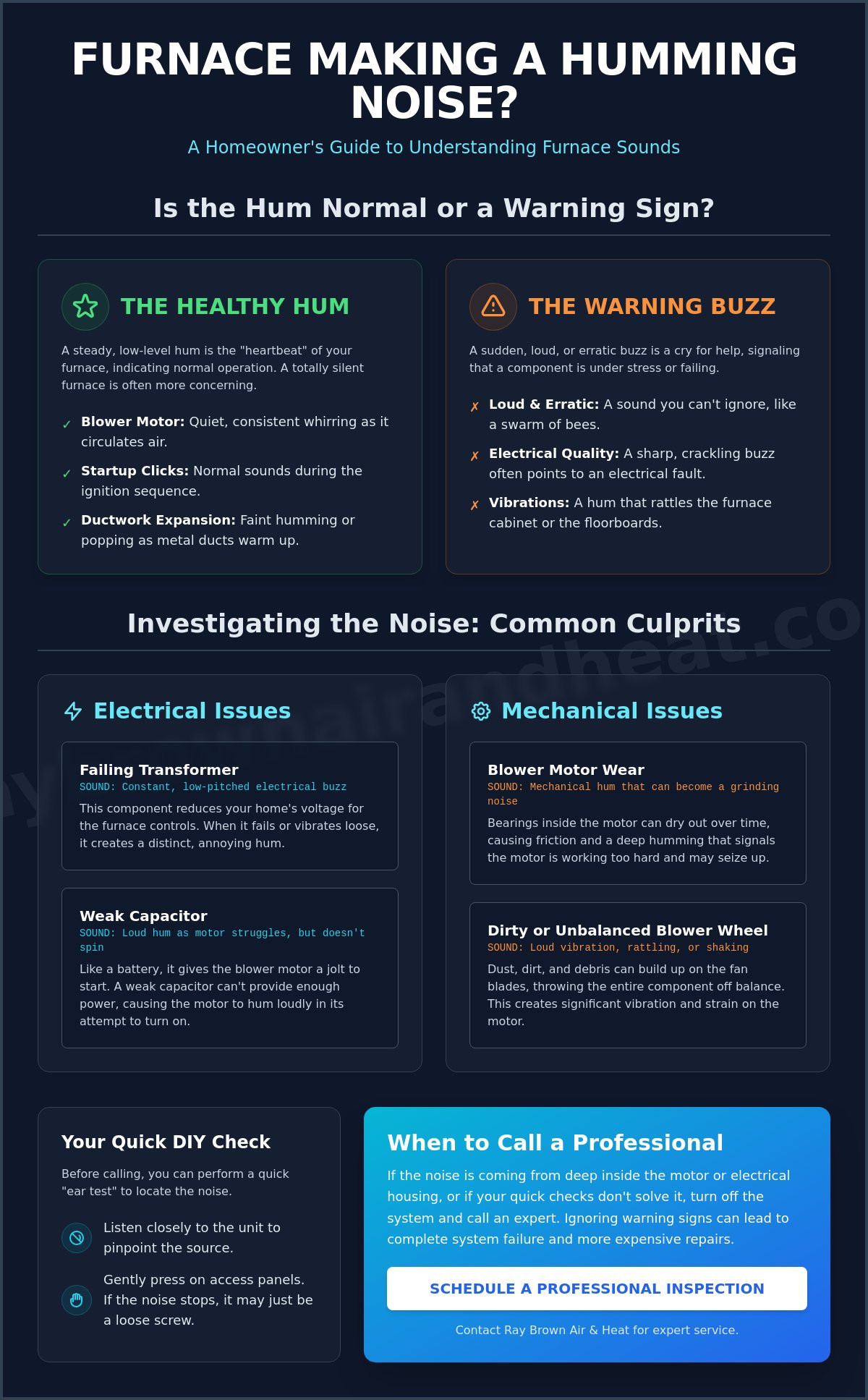
When the temperature finally drops on the Space Coast, hearing your heating system kick on can be a relief. However, that relief quickly turns to worry if you notice a new sound. It’s helpful to distinguish between a “normal hum” and a “trouble buzz.” A healthy system creates a steady, low-frequency sound. This is simply the blower motor spinning and air moving through your vents. It should be a background noise that you eventually stop noticing. On the other hand, a trouble buzz is often louder, erratic, or has a sharp electrical quality to it.
You might also notice a temporary hum or a few clicks right when the cycle starts. This is just the initial ignition process. Your system is opening gas valves and striking an ignitor, which takes a moment of extra effort. Another common sound occurs as your metal ductwork warms up. Metal expands when it gets hot, and this physical shift can cause a vibrating or humming sound that echoes through your home. While it might sound like the unit is struggling, it’s often just the house settling into the new temperature.
The Heartbeat of a Healthy Furnace
Think of the quiet whirring of your blower motor as the heartbeat of your home’s comfort system. A constant, low-level hum is a sign that electricity is flowing smoothly to the components that need it. If you’ve lived in Titusville or Cocoa for a while, you know how vital a reliable system is during a cold snap. For those who want a better look at how these systems are built, Understanding Your Furnace provides a great overview of the internal parts that keep your family warm. Since 1963, our family-owned team at Ray Brown Air and Heat has helped neighbors understand that a silent furnace is often more concerning than one with a gentle hum. Total silence usually means the system isn’t receiving power at all, which could point to a blown fuse or a failed control board.
When the Hum Becomes a Warning
The transition from a gentle background noise to a distracting vibration is your first warning sign. If a furnace making humming noise starts to rattle the floorboards or sounds like a swarm of bees, something is likely wrong. This often happens due to resonance. If an internal part is slightly off-balance, it can cause the entire metal cabinet to vibrate. You can perform a quick “ear test” to see if the fix is simple. Walk up to the unit and listen closely. If the sound seems to come from the exterior, try pressing your hand against the access panels. If the noise stops, a loose screw is the likely culprit. However, if the furnace making humming noise is coming from deep inside the motor or the electrical housing, it’s a signal that a component is under stress and needs professional attention before it fails completely.
Common Culprits Behind Abnormal Furnace Buzzing or Humming
Identifying the source of the sound is the first step toward a quiet home. While many systems in Florida are heat pumps rather than traditional gas furnaces, they share many of the same mechanical and electrical parts. If you have a furnace making humming noise, the issue is almost always tied to how power is moving through the unit or how a motor is spinning. Understanding these specific parts can help you explain the problem clearly when you call for a repair. Our goal is to help you feel confident in knowing exactly what is happening inside your cabinet.
Electrical Components and Voltage Issues
The most frequent cause of a low-pitched electrical buzz is a faulty transformer. This small but vital component steps down the high voltage from your home’s main line to a lower level that your thermostat and control board can use. If the transformer is failing or has simply vibrated loose from its mounting, it will create a constant, annoying hum. Another common electrical failure involves the capacitor. This part acts like a temporary battery that gives the blower motor the “kick” it needs to start. When a capacitor grows weak, the motor might hum loudly as it struggles to turn over, but it won’t actually spin. In our local area, the heavy humidity in Merritt Island and Rockledge can accelerate corrosion on these electrical connections, making these buzzes more common as your system ages.
Mechanical Vibrations and Motor Wear
If the sound is more of a physical vibration than an electrical buzz, your blower motor is likely the cause. These motors rely on ball bearings to spin smoothly at high speeds. Over time, the lubrication in these bearings can dry out, leading to a mechanical hum that eventually turns into a grinding noise. A dirty blower wheel can also cause significant issues. If dust and pet hair bypass your filter, they can build up on the blades and throw the entire wheel out of balance. This imbalance creates a vibrating hum that can be felt through your walls. Keeping these parts clean and lubricated is a key part of ac maintenance near me, which helps prevent these expensive components from burning out prematurely.
Sometimes the fix is even simpler, such as tightening a few loose screws on an unseated access panel. If you’re not sure which part is failing, our team has been helping families since 1963 and can quickly diagnose the issue for you. If that hum is starting to worry you, feel free to reach out to us for a friendly and professional inspection.
Myth vs. Reality: Debunking Common Furnace Noise Misconceptions
When your home finally gets cozy during a cool Florida night, it’s tempting to ignore a new sound. Many homeowners hope that if they wait long enough, the issue will simply resolve itself. However, after serving the Space Coast for over 60 years, our team at Ray Brown Air and Heat has found that ignoring a furnace making humming noise usually leads to bigger headaches. Understanding the truth behind common myths can save you from a cold night and a much larger repair bill.
One of the biggest myths we hear in Cocoa and Titusville is that a noise will simply vanish once the system “warms up.” While some metal expansion is normal, a true electrical hum or mechanical buzz doesn’t just go away. In fact, these sounds often get louder as the system runs longer and components get hotter. Another common fear is that any unusual noise means you need an expensive total replacement. This is rarely the case. Most humming sounds are tied to specific, replaceable parts like the ones we’ve identified. Catching these early is the best way to avoid the cost of a brand new system.
Perhaps the most dangerous misconception is believing that if the system is still blowing heat, there isn’t an emergency. Just because your home is warm doesn’t mean the electrical components are safe. A hum is often the only warning your system gives before a part completely burns out or, in rare cases, creates a safety hazard.
The Danger of ‘Wait and See’
Ignoring a furnace making humming noise is a lot like ignoring a check engine light in your car. A small buzz in a capacitor might seem minor, but that capacitor is responsible for starting your blower motor. If it fails, the motor can’t spin and will eventually burn out from the constant electrical strain. There is also the risk of electrical arcing. When a component is loose or failing, electricity can “jump” between connections. This creates heat and can damage the surrounding wiring or control boards. Your furnace uses noise to communicate its “pain,” and listening early is the best way to keep your family safe.
DIY Fixes: What to Avoid
We know our neighbors like to be handy, but your furnace’s electrical cabinet is not the place for experimentation. Safety is our top priority. Never open the access panels without first turning off the power at the breaker. Many modern blower motors are sealed units. A common mistake is trying to “lubricate” these motors by spraying oil into them, which can actually attract more dust and cause a fire hazard. The only safe DIY step you should take is checking your air filter. A clogged filter makes the motor work twice as hard, which can create a strained humming sound. If a fresh filter doesn’t stop the noise, it’s time to call in a professional who has the right tools to test your electrical loads safely.
What to Do When Your Furnace Starts Making Noise
Discovering your furnace making humming noise can be unsettling, but taking a few systematic steps can help you determine the severity of the issue. Before you assume the worst, there are simple checks you can perform safely. These actions help protect your equipment and provide our technicians with valuable information if a repair is eventually needed. We’ve helped families in Titusville and Cocoa navigate these issues since 1963, and we always recommend starting with the basics.
- Step 1: Check your air filter. A clogged filter is the most common cause of motor strain. When air can’t flow freely, the motor has to work much harder to pull air through the system, which often creates a loud, vibrating hum.
- Step 2: Listen for the sound’s texture. Try to identify if the noise sounds like a thin electrical buzz or a heavy mechanical vibration. Electrical sounds often point to the transformer, while vibrations usually indicate a loose part or an unbalanced blower wheel.
- Step 3: Clear the area. Ensure there is no debris, such as fallen leaves or storage boxes, leaning against your indoor or outdoor units. Physical contact with the cabinet can amplify normal operational sounds into a loud hum.
- Step 4: Know when to power down. If the noise is accompanied by a burning smell or if the hum is so loud it can be heard throughout the house, turn the system off at the thermostat and the breaker immediately.
Immediate Troubleshooting for Homeowners
One of the best ways to narrow down the problem is to use your thermostat’s “Fan Only” mode. Switch the fan setting from “Auto” to “On” without turning on the heat. If the furnace making humming noise continues, the issue is likely with the blower motor or its capacitor. If the noise only happens when the heat is actually running, the culprit is likely a transformer or an ignition component. You should also check the exterior of the unit for loose access panels. Sometimes a simple turn of a screwdriver on a loose panel screw can stop a vibrating hum instantly. These quick checks can save you time and provide peace of mind.
When to Call a Professional Technician
While basic checks are helpful, certain signs require an expert eye to ensure your home remains safe. If you see sparks, hear a loud “pop” followed by a hum, or notice a persistent burning odor, it’s time to call for help. When you reach out, try to describe the noise as specifically as possible. Is it constant? Does it only happen at the start of a cycle? This helps us bring the right parts for a faster fix. During a furnace inspection, it’s also a great time for us to check your evaporator coil for air conditioner. Since most Florida homes use a combined system, ensuring both the heating and cooling components are clean and functional prevents future breakdowns. If your troubleshooting doesn’t quiet the noise, schedule a professional inspection with our dependable team to get your system back to peak performance.
Why Brevard County Trusts Ray Brown Air & Heat Since 1963
For over 60 years, Ray Brown Air and Heat has been a fixture in the Space Coast community. We’ve seen the area grow and change, but our commitment to our neighbors has stayed the same. Since 1963, our family-owned and operated business has focused on one thing: keeping your home comfortable with service you can actually trust. We don’t believe in high-pressure sales or confusing technical jargon. Instead, we offer the kind of straightforward, honest help that only a local expert can provide.
When you’re dealing with a furnace making humming noise, you need more than just a quick fix; you need the peace of mind that comes from decades of experience. Our technicians have spent years working on the specific systems that are common in Florida homes. Whether you have a traditional gas unit or a modern high-efficiency heat pump, we’ve likely seen your exact problem hundreds of times before. This deep familiarity allows us to diagnose issues quickly and accurately, saving you time and preventing unnecessary stress.
Local Expertise for the Space Coast Climate
Florida’s unique climate requires a specialized touch. Just as homeowners in other regions rely on professionals for specific tasks like vinyl liner replacement Closter NJ, our team is intimately familiar with the brands and models that thrive in our salty, humid air. From the historic homes in Titusville to the newer developments in Melbourne and Cocoa, we understand the specific challenges your HVAC system faces every day. We pride ourselves on our ability to offer fast, same-day service to restore your comfort as quickly as possible. We know how quickly a house can get uncomfortable when the heat or air goes out, so we make your family’s safety our top priority.
The Ray Brown Difference: Trust and Reliability
We built our reputation on a no-nonsense approach to diagnostics and pricing. When we inspect a furnace making humming noise, we tell you exactly what’s wrong and what it will take to fix it. There are no hidden fees or surprise charges. We treat your home like it’s our own, which is why so many families have stayed with us for generations. Our deep roots in the community mean we’re not just your technicians; we’re your neighbors.
If you’re hearing a buzz that won’t go away, we invite you to contact us for 24/7 emergency repair. Our team is always ready to help, day or night, ensuring you’re never left in the cold. You can also explore our comprehensive ac repair and service guide to learn more about how we keep systems across the Space Coast running efficiently year-round. Let our family take care of yours.
Restore Your Peace of Mind and Home Comfort
A quiet home is a comfortable home. We’ve explored how to tell the difference between a healthy system and a furnace making humming noise that needs expert attention. Most buzzing sounds are tied to specific, replaceable parts like capacitors or transformers. Catching these small issues early protects your blower motor and keeps your family safe from potential electrical risks. It’s always better to address a minor vibration today than to face a total system failure during a cold snap.
Since 1963, our family-owned and operated team has been a steady hand for homeowners across Titusville and Cocoa. We provide the honest diagnostics you deserve without any high-pressure sales tactics. If that persistent buzz is keeping you up at night, don’t wait for a total breakdown. Our expert technicians are ready to help you get back to a warm, quiet home.
Schedule Your Emergency Furnace Repair with Ray Brown Air & Heat! Our team is available with 24/7 emergency service to ensure you never have to face a cold night alone. We are proud to serve the Space Coast and look forward to helping you keep your system running smoothly for years to come.
Frequently Asked Questions
Is it dangerous if my furnace is making a humming noise?
A humming noise is usually not an immediate danger, but it shouldn’t be ignored because it often signals an electrical malfunction. While a low hum is normal, a loud buzz can indicate that a component like a transformer is failing or that there is an issue with the gas valve. Ignoring these signs can lead to a total system breakdown or, in rare cases, electrical arcing within the cabinet.
Can a dirty air filter cause my furnace to hum or buzz?
Yes, a clogged air filter is a very common cause of a vibrating hum. When the filter is full of dust, the blower motor has to work much harder to pull air through the system. This extra strain creates a loud, labored sound that can resonate through your ductwork. Changing your filter every 30 to 90 days is the easiest way to prevent this specific noise and protect your motor.
Why does my furnace hum but the fan won’t spin?
This specific combination usually points to a failed start capacitor or a seized blower motor. The capacitor provides the initial electrical boost needed to get the motor spinning. If it fails, the motor will receive power and hum loudly but won’t have the strength to turn. This is a common issue our technicians see across the Space Coast due to the high workload on local HVAC systems.
How much does it typically cost to fix a buzzing furnace transformer?
The cost to repair a buzzing transformer depends on the specific model of your furnace and the complexity of the electrical connections. While transformers are generally replaceable parts, the total cost will include both the component itself and the professional labor required to install it safely. A technician can provide a precise estimate after testing the voltage and confirming the failure during a diagnostic visit.
Should I turn off my furnace if it starts making a loud buzzing sound?
You should turn off your system at the thermostat if you hear an unusually loud or sharp buzzing sound. Constant buzzing can indicate that a part is overheating or that electricity is flowing where it shouldn’t. Shutting the system down immediately prevents further damage to expensive components like the blower motor or the control board while you wait for a professional to arrive.
What is the difference between a furnace hum and a furnace rattle?
A furnace hum is typically a steady, vibrating sound caused by electrical components or the motor’s rotation. In contrast, a rattle is usually a sharp, metallic sound caused by loose physical parts like screws, access panels, or debris inside the blower wheel. While a hum often points to an internal electrical component failing, a rattle is frequently a mechanical issue that can be fixed by tightening loose hardware.
How long can a furnace motor last once it starts making noise?
It is difficult to predict exactly how long a noisy motor will last, but a new hum is a clear sign that the part is under stress. Once bearings start to fail or the motor begins to overheat, a total failure could happen within days or weeks. Addressing a furnace making humming noise early often allows for a simple part replacement rather than an expensive full motor overhaul.
Does a humming noise mean I need a whole new HVAC system?
A humming noise rarely means you need to replace your entire HVAC system. Most buzzing sounds are caused by individual, replaceable components like capacitors, transformers, or contactors. Our family-owned team focuses on honest diagnostics to identify the specific failing part. We only recommend a full replacement if the system is very old and the repair costs are no longer a practical investment for your home.